


What Private Label Actually Looks Like in Practice
“Private label” gets used as shorthand for outsourcing production, as if the hard part ends the moment a formula is approved. In reality, the formula is the easy part. What actually separates a private label partnership that lasts from one that falls apart after the first order is everything that happens next: matching specifications, holding quality steady, and delivering on time, order after order.
It starts with matching your specifications, not filling a generic order
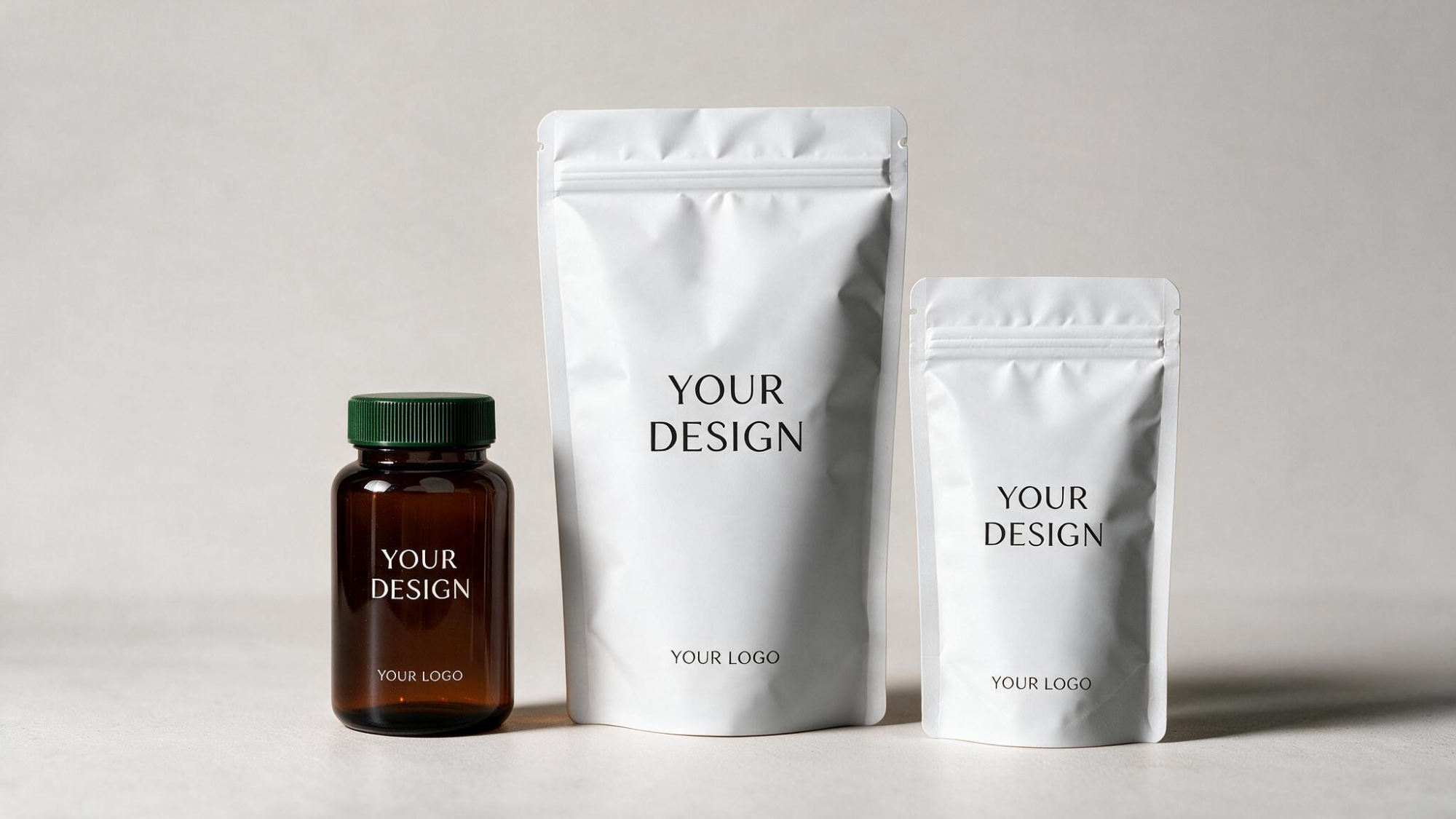
At Nature’s Finest, every private label project begins with the retailer’s or brand’s own requirements, not a one-size-fits-all template. That means formulation adjusted to the brief, packaging that matches the exact look and format a client needs, and labeling that satisfies the regulatory requirements of the markets the product will sell in. A manufacturing partner that treats every client’s product the same way isn’t really producing a private label product. They’re relabeling their own.
Matching specifications also means being upfront about what’s realistic. If an ingredient, format, or packaging choice would compromise shelf life, cost, or compliance, that’s a conversation we have before production starts, not a surprise after it.
Certified production, not a one-off good batch
Anyone can produce a strong first sample. The harder standard is producing the same quality on the hundredth order as the first. That’s why GMP and HACCP certification isn’t a line on a certificate for us, it’s the framework behind every batch: documented processes, consistent raw material sourcing, and quality control checks at each stage of production.
It’s this documentation and consistency that lets a brand put its name on a product manufactured somewhere else entirely, and trust that what ships in month twelve is identical to what shipped in month one.
Reliability is the part that rarely makes it into the pitch
The part of private label that gets the least attention in a sales conversation is delivery reliability, but it’s usually the part that decides whether a partnership actually survives. National retail chains across Europe work with Nutrisslim for exactly this reason: predictable lead times, consistent stock availability, and production capacity that scales with demand instead of buckling under it.
A missed delivery window doesn’t just delay one order. For a brand selling through retail, it can mean losing shelf space to a competitor who showed up on time, or a stockout during exactly the week demand spiked. Reliability compounds. So does the lack of it.
We hold ourselves to the same standard
We don’t just say this, we build to it. Nature’s Finest, our own brand, is manufactured on the same production lines, to the same specifications, and under the same GMP and HACCP certified quality control as every private label product we make. It’s on shelves in 40+ markets today, backed by 250+ ready-to-sell products. If we’re willing to put our own name on what comes off that line, it’s a fair measure of what any private label partner should be able to expect from us.
What to actually ask when you're evaluating a manufacturing partner
The right question isn’t “can you make this product.” Most manufacturers can make a product, at least once. The questions worth asking are closer to these: Can you match our exact specifications, not just something close to them? Can you document and certify your quality process, not just describe it? And can you deliver the same product, at the same standard, for the fiftieth order as reliably as the first?
What this looks like day to day
In practice, this rarely looks dramatic. It looks like a packaging format adjusted twice before a client’s retail buyer signs off. It looks like a formulation tweaked for shelf stability in a market with a longer distribution chain than the one it was originally built for. It looks like the same reorder, placed on the same schedule, arriving on time for the fortieth month in a row without anyone at the client’s end having to think about it.
None of that shows up in a pitch deck. It shows up in whether a brand can keep growing without its supply chain becoming the thing that holds it back.
If you’re planning your own supplement range, or looking to move production to a partner who can keep pace with a growing retail footprint, we’re happy to walk through what that would look like for your brand.